
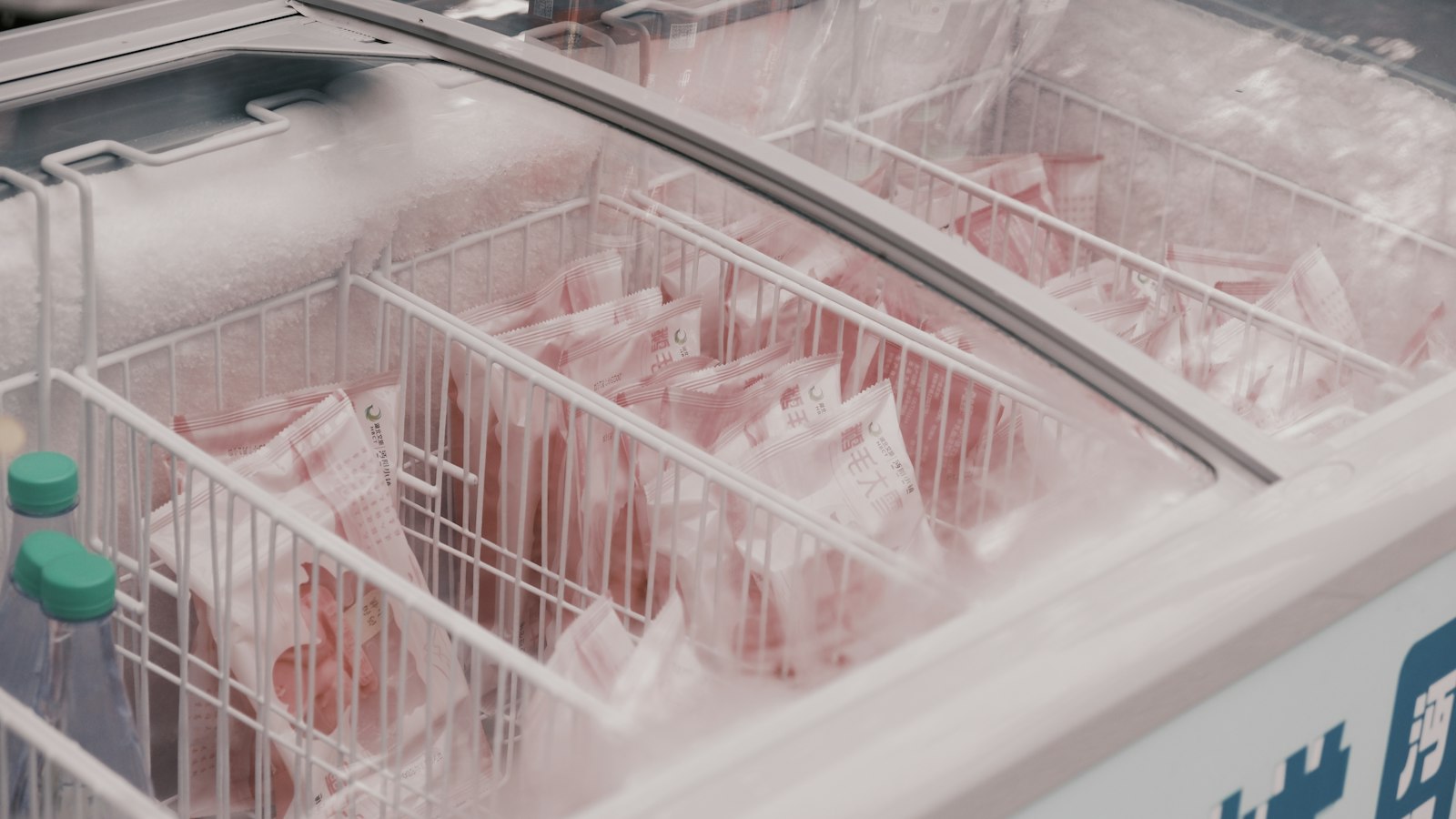
Chest Freezer Buying Guide: Stock Up Before Fall
Fall is when a lot of families around Kitchener and Guelph fill the freezer. Local produce is at its best, farms take orders for bulk meat, and batch cooking for busy school nights starts to make sense. If the freezer above your fridge is already packed, a chest freezer is the simplest fix.
Why a Chest Freezer
Chest freezers give you more usable space for their footprint than most upright models. Cold air also stays put when you lift the lid, so temperatures hold steadier and they tend to use less electricity.
The trade off is organization. Food at the bottom can be hard to reach, so plan on using baskets and keeping a simple list taped to the lid.
1. Pick the Right Size
Chest freezers are sold by capacity in cubic feet. A common rule of thumb is about 1.5 cubic feet per person, plus extra if you buy meat in bulk or freeze a lot of garden produce.
As a rough guide, 5 to 7 cubic feet suits a couple or a small household topping up regular groceries. Around 8 to 15 cubic feet works for most families who buy in bulk.
Do not oversize. A freezer that sits half empty wastes hydro, and a fuller freezer holds its temperature better.
2. Measure the Spot and the Path
Measure where the freezer will sit, then measure every doorway, hallway and staircase on the way there.
Leave a few centimetres of space around the sides and back for airflow, and enough clearance above to open the lid fully.
3. Check the Garage Rating
Many people want the freezer in the garage. Ontario garages can drop well below freezing in January and pass 30 degrees Celsius in July, and a standard freezer may struggle at either extreme.
If it is going in an unheated garage or cold room, choose a model the manufacturer rates for garage use and check the listed operating temperature range.
4. Manual Defrost or Frost Free
Most chest freezers are manual defrost. They use less energy and are gentler on food, but you will need to defrost them about once a year, or whenever frost builds past roughly 6 mm.
Frost free models skip that chore but usually cost more to buy and run.
5. Features Worth Having
An adjustable thermostat that holds minus 18 degrees Celsius is the basic requirement. Beyond that, a few details make a real difference day to day.
Removable hanging baskets keep small items from sinking to the bottom. A drain plug makes defrosting much easier. A temperature alarm is worth having if you are storing a lot of meat, and a lid lock is useful with young children in the house.
6. Look for Energy Star
A freezer runs around the clock for many years. ENERGY STAR certified models use less electricity than standard ones, and that shows up on your hydro bill over time.
7. Save with Scratch and Dent
A chest freezer usually lives in a basement or garage where nobody sees it, which makes it a perfect candidate for scratch and dent. These are new units with cosmetic marks from shipping or handling. A dent on the side panel has nothing to do with how cold it keeps your food.
If you are looking for scratch and dent in Kitchener or Guelph, ask to see what is on the floor.
Setting It Up
If the freezer travelled on its side, let it stand upright before plugging it in. Your manual will list the wait time. Let it reach minus 18 degrees Celsius before loading food, and plug it directly into a wall outlet rather than an extension cord.
Find Your Freezer Before the Fall Rush
Al's Appliance is a local appliance store in Kitchener and Guelph, with new, used and scratch and dent freezers at our Kitchener showroom at 20 Stewart Street and our Guelph location at 6 Holliday Street. Delivery is available, so you do not have to figure out how to get it down the basement stairs yourself.
Call 519-824-8828 or visit alsappliance.ca to see what is in stock before harvest season gets going.