
How Long Do Appliances Last? A Realistic Lifespan Guide
On service calls around Kitchener and Guelph, one of the questions our technicians hear most is whether a machine is worth fixing. The answer depends a lot on its age.
Knowing how long appliances last on average helps you decide whether to put money into a repair or start shopping. The ranges below are typical for normal household use. Heavy use and hard water shorten them, and good care can stretch them.
Refrigerator: 10 to 15 Years
Fridges run nonstop, and many still last well past a decade.
Signs it is near the end: the compressor runs constantly, the fridge cannot hold 4 degrees Celsius or the freezer will not reach minus 18, or the sides of the cabinet feel unusually hot. On an older fridge, a sealed system failure is often where replacement makes more sense.
Freezer: 12 to 20 Years
Chest freezers are simple machines and usually outlast fridges. Watch for frost building much faster than it used to, or food softening around the edges. Rust through the cabinet or a failing lid seal on an older unit are signs to start looking.
Washing Machine: 10 to 14 Years
Top load and front load washers land in a similar range with average use.
End of life signs include rust on the drum or cabinet, a leaking outer tub, or a loud roar during spin that points to worn tub bearings. Bearing jobs on older front loaders take a lot of labour, and many owners choose to replace instead.
Dryer: 10 to 15 Years
Dryers are mechanically simple, and most parts, like belts, rollers, thermal fuses and heating elements, can be replaced. A dryer with a clean vent can last a long time.
Replacement makes sense when the drum is damaged, the cabinet is rusting through, or a control board fails on an older model.
Dishwasher: 8 to 12 Years
Dishwashers have one of the shorter lifespans in the kitchen. Hard water and skipped filter cleaning wear out pumps and seals faster. A rusted rack or tub, a leak from the tub itself, or repeated control problems usually mean it is time.
Stove and Oven: 13 to 18 Years
Ranges are among the longest lasting appliances in the house, and gas models often run a little longer than electric. Elements, igniters and bake sensors are routine repairs.
A cracked glass top or a failed control board on an older model can tip the decision toward replacing.
Microwave: 7 to 10 Years
Countertop microwaves are usually cheaper to replace than repair. Over the range models can be worth a service call if they are fairly new. Stop using any microwave that sparks, smells like burning, or has a damaged door. Microwaves hold high voltage even when unplugged, so repairs are never a DIY job.
Should I Repair or Replace My Fridge?
This is the question behind a lot of service calls, and it applies to every appliance above. A useful rule of thumb: if the machine is past the halfway point of its expected life and the repair costs more than half the price of a comparable new one, replacing usually makes more sense.
A five year old fridge with a failed fan motor or defrost part is almost always worth fixing. A fifteen year old fridge with a failed compressor usually is not. Everything in between depends on the repair and the condition of the rest of the machine.
Energy use matters too. An older fridge can draw noticeably more hydro than a current ENERGY STAR model.
Not Sure If It Is Worth Fixing? Ask Us
Our technicians look at the whole machine, not just the part that failed, and they will tell you if a repair does not make sense. Al's Appliance provides appliance repair in Kitchener, Waterloo, Cambridge and Guelph, right in your home.
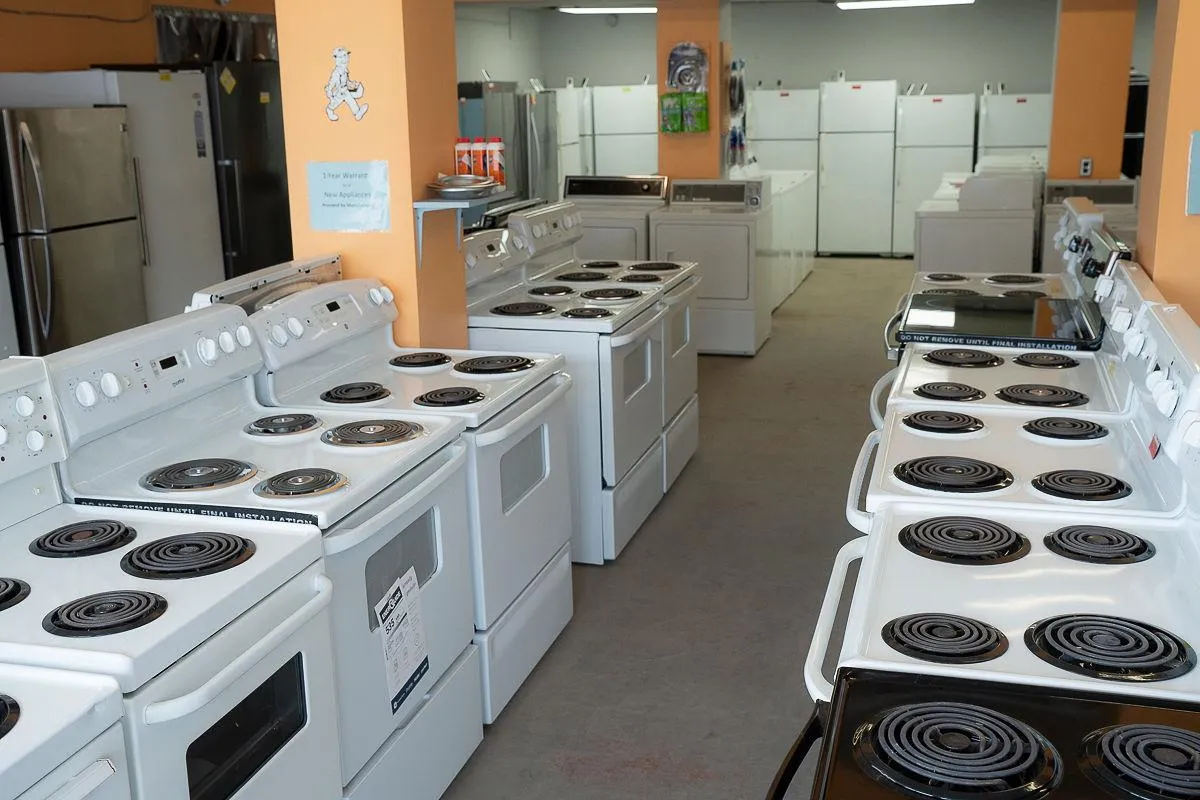
If it is time to replace, visit our Kitchener showroom on Stewart Street or our Guelph location on Holliday Street for new, used and scratch and dent appliances, with delivery available.
Call 519-824-8828 or go to alsappliance.ca to book a repair or see what is in stock.